Multiplex electrochemiluminescence panels for viral immune response profiling, vaccine serology, cytokine storm monitoring, and oncolytic virus research — from focused 4-plex infection panels to the 20-plex viral immune response platform, across human and non-human primate models.
Infectious disease research demands assays that capture the full arc of the immune response: early innate cytokine and interferon signatures, adaptive T-cell polarization, serological evidence of vaccine-induced antibody responses, and the cytokine storm that marks severe infection. Our MSD infectious disease panels are purpose-built for each of these questions — viral antigen serology panels for vaccine immunogenicity, cytokine/chemokine panels for immune response characterization, and specialized panels for emerging pathogens (COVID-19, mpox, influenza). For preclinical vaccine development, NHP-qualified panels enable translational immunogenicity assessment on the same platform used for human clinical samples — eliminating cross-platform variability between preclinical and clinical immunogenicity data.
The immune response to infection spans four interconnected dimensions: innate cytokine and interferon release within hours, chemokine-directed immune cell recruitment, adaptive T-cell polarization over days to weeks, and serological antibody responses marking immunological memory. Capturing this full arc requires more than a single cytokine panel — it requires viral antigen serology for vaccine readouts, cytokine panels for immune response phenotyping, and interferon-specific assays for early innate response characterization.
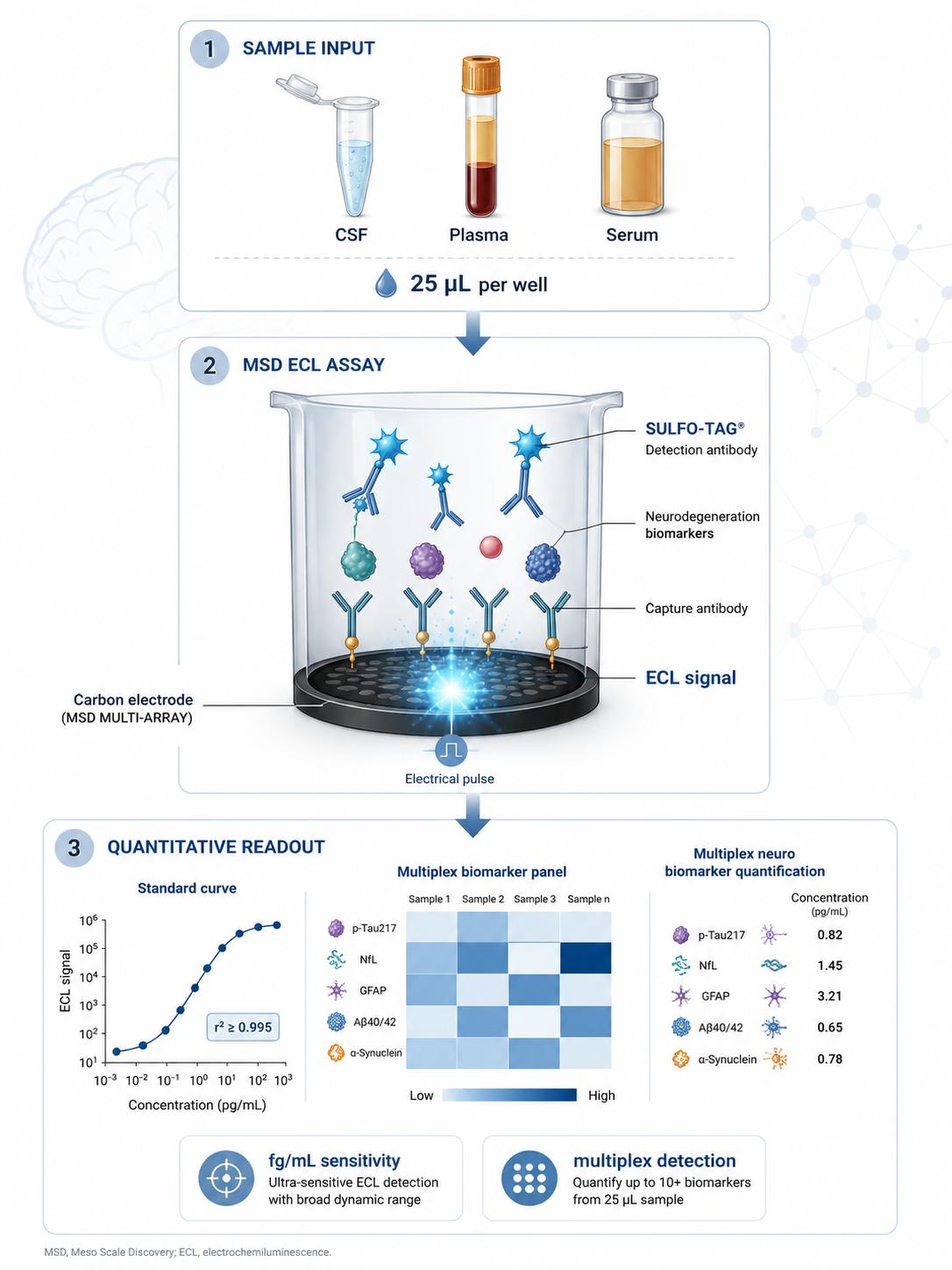
14+ pre-configured MSD panels spanning viral serology, cytokine profiling, and immune response characterization for human and NHP.
| Panel | Plex | Analytes | Species | Application |
|---|---|---|---|---|
| Influenza/RSV Serology 6-Plex Panel 1 | 6 | RSV Pre-Fusion F, Flu B/Phuket HA, Flu B/Brisbane HA, Flu A/Shanghai H7, Flu A/Michigan H1, Flu A/Hong Kong H3 | Human | Influenza vaccine immunogenicity |
| Influenza/RSV Serology 6-Plex Panel 2 & 3 | 6 | Variant strain-specific HA antigen configurations | Human | Strain-specific vaccine response |
| Orthopoxvirus Serology 10-Plex | 10 | MPXV A29L, A35R, B6R, E8L, M1R, VACV A27L, A33R, B5R, D8L, L1R | Human | Mpox/Vaccinia vaccine research |
| COVID-19 Research 4-Plex | 4 | IFN-γ, IL-6, IFN-β, Pentraxin 3 | Human | COVID-19 immune response |
| Virus Infection 4/7/9-Plex | 4–9 | IFN-γ, IL-1β, IL-4, IL-5, IL-6, IL-8, IL-10, IL-12p70, TNF-α | Human | General viral immune monitoring |
| Virus Research 20-Plex | 20 | G-CSF, GM-CSF, IFN-α2a, IFN-β, IFN-γ, IL-1β, IL-1RA, IL-4, IL-5, IL-6, IL-7, IL-8, IL-9, IL-10, IL-12p70, IP-10, MCP-1, MIP-1α, TNF-α, VEGF-A | Human | Broad viral immune profiling |
| Interferon 4-Plex | 4 | IFN-γ, IL-29/IFN-λ1, IFN-α2a, IFN-β | Human | Type I/II/III IFN response |
| NHP Virus Research 19-Plex | 19 | G-CSF, GM-CSF, IFN-α2a, IFN-γ, IL-1β, IL-1RA, IL-4, IL-5, IL-6, IL-7, IL-8, IL-9, IL-10, IL-12p70, IP-10, MCP-1, MIP-1α, TNF-α, VEGF-A | NHP | Preclinical vaccine studies |
| NHP Infection 3/5/6-Plex | 3–6 | IFN-γ, IL-1β, IL-5, IL-6, IL-8, IL-10 | NHP | NHP infection model monitoring |
| Oncolytic Virus Research 12-Plex | 12 | CTLA-4, IFN-α2a, IFN-β, IFN-γ, IL-1β, IL-2Rα, IL-6, IL-8, IP-10, LAG3, MIP-1α, PD-1, TIGIT | Human | Oncolytic virotherapy research |
Panel availability confirmed during project consultation. Custom antigen panels for emerging pathogens can be developed via U-PLEX or R-PLEX. The MSD Orthopoxvirus 10-Plex has been validated in published research for serological profiling of mpox and vaccinia antibody responses (J Clin Microbiol, 2025). All services are for research use only.
Viral antigen serology panels directly quantify antibody responses to specific vaccine antigens — HA strain-specific responses for influenza vaccines, RSV pre-fusion F for RSV vaccines, and MPXV/VACV antigens for poxvirus vaccines. Multiplex format enables simultaneous assessment of multi-strain or multi-valent vaccine responses from a single sample.
Cytokine and interferon panels capture the full innate-to-adaptive immune cascade during viral infection — early IFN-α/β/λ responses within hours, IL-6/TNF-α/IL-1β inflammatory surge, chemokine-mediated immune cell recruitment, and T-cell polarization cytokines reflecting adaptive immunity. The 20-Plex provides the broadest single-well coverage.
Severe viral infections — COVID-19, influenza, EBV-associated HLH — can trigger cytokine release syndrome (CRS) with IL-6, TNF-α, IL-1β, IFN-γ, and IL-8 elevations. Serial multiplex monitoring captures the trajectory and magnitude of the cytokine storm, supporting severity stratification and therapeutic response assessment in research contexts.
NHP-qualified infectious disease panels enable translational immunogenicity and efficacy studies in cynomolgus and rhesus macaques. The same ECL platform used for NHP preclinical studies is used for human clinical samples — eliminating cross-platform variability in vaccine immunogenicity bridging.
The oncolytic virus 12-Plex combines immune checkpoint markers (PD-1, CTLA-4, LAG3, TIGIT) with antiviral cytokines (IFN-α/β/γ) and inflammatory mediators — capturing the dual immunological effects of oncolytic viruses: direct antiviral immune activation and checkpoint-mediated anti-tumor immunity.
Pre-configured panels for COVID-19, mpox, and influenza provide immediate research capability for outbreak pathogens. For novel emerging pathogens, custom U-PLEX or R-PLEX panels can be developed from recombinant antigens — contact us to discuss rapid deployment timelines.
Complementary dimensions of the anti-viral immune response
Combined serology + cytokine panels capture the full immune response arc — antibody-mediated memory + innate-to-adaptive cytokine cascade. For research use only.
Standard SST collection for antibody-based serology panels. 25 µL per well. For vaccine studies: pre-immune and post-vaccination timepoints collected under consistent conditions. Supported by all MSD serology and viral antigen panels.
Preferred for cytokine and chemokine panels. Process within 1 hour of collection at 4°C, aliquot into polypropylene cryovials, freeze at −80°C. For cytokine storm assessment: serial timepoints capturing the acute phase (days 0–7 post-infection or post-treatment).
For neurotropic virus research, meningitis/encephalitis studies, and CNS cytokine profiling. Collect in polypropylene tubes, centrifuge at 2,000×g for 10 min at 4°C, aliquot, and freeze at −80°C. Low-volume compatible — 25 µL per panel.
Shipping: Dry ice, overnight courier. BSL-2 samples must be inactivated per institutional protocol before shipping. Contact us for BSL-2/BSL-3 sample handling coordination. Cell culture supernatant also supported for in vitro viral infection studies — centrifuge to remove cells and debris before freezing.
Antibody titers (serology) or analyte concentrations (cytokines) with per-analyte QC metrics. Excel + PDF.
per-antigen serological signals, multi-analyte standard curves, viral antigen lot documentation, and plate layout maps. Analysis-ready formats.
Protocol, antigen lot information, and QC criteria with viral antigen specifications, serological QC thresholds, and assay protocol details for infectious disease research.
| Feature | MSD | Single-Analyte ELISA (×N) | Luminex xMAP |
|---|---|---|---|
| Serology + Cytokines in One Run | Viral antigen serology + cytokine profiling from same platform | Separate assays for antibody and cytokine measurement | Primarily cytokine/chemokine panels; serology limited |
| Sample (serology 10-plex) | 25 µL | 1000 µL (100 µL × 10 antigens) | ~25-50 µL (bead-based) |
| Interferon Subtyping | Dedicated 4-plex: IFN-α2a, IFN-β, IFN-γ, IFN-λ1 | 4 separate ELISA kits | Available via cytokine panels |
| NHP-Human Translational Bridging | Species-matched panels on same platform, same detection | Different kits, different manufacturers | Species-matched panels available |
| Emerging Pathogen Readiness | U-PLEX custom panels from recombinant antigens | Long development timeline per analyte | Custom bead coupling available |
| Item | Full Service | Notes |
|---|---|---|
| Sample Processing | Included | Serum/plasma/CSF per panel protocol |
| Standard Curves | Per-analyte 7-point calibrator | Recombinant protein and antigen standards |
| QC Samples | Multi-level, duplicate | Low, medium, high per panel |
| Data Report | Excel + PDF | Antibody titers or analyte concentrations with QC metrics |
For Research Use Only. Not for diagnostic procedures.
Pinto, D. et al. (2020) Nature. 583(7815):290-295. "Cross-neutralization of SARS-CoV-2 by a human monoclonal SARS-CoV antibody." DOI: 10.1038/s41586-020-2349-y · PMID: 32422645
Corbett, K.S. et al. (2020) New England Journal of Medicine. 383(16):1544-1555. "Evaluation of the mRNA-1273 Vaccine against SARS-CoV-2 in Nonhuman Primates." DOI: 10.1056/NEJMoa2024671 · PMID: 32722908
Baden, L.R. et al. (2021) New England Journal of Medicine. 384(5):403-416. "Efficacy and Safety of the mRNA-1273 SARS-CoV-2 Vaccine." DOI: 10.1056/NEJMoa2035389 · PMID: 33378609
Lucas, C. et al. (2020) Nature. 584(7821):463-469. "Longitudinal analyses reveal immunological misfiring in severe COVID-19." DOI: 10.1038/s41586-020-2588-y · PMID: 32717743
NHP and human infectious disease panels use species-validated antibody pairs optimized for each species' analytes, so direct numerical comparison of absolute concentrations is not appropriate. However, because both use the same detection technology and plate format, the analytical framework is identical — enabling comparison of relative responses (fold-change from baseline, response patterns, temporal dynamics) without the platform-switching variability that confounds cross-species interpretation when different assay technologies are used for preclinical and clinical samples. For research use only.
Yes. For novel viral antigens, R-PLEX custom development enables assay configuration against new pathogen targets. For pathogens where recombinant antigens are already available, U-PLEX custom panels can be configured more rapidly by linking available antibodies to the U-PLEX plate. Contact us with your pathogen and antigens of interest — we'll assess feasibility and provide a development timeline. For research use only.
Samples must be inactivated per your institutional biosafety protocol before shipping. Common inactivation methods — heat inactivation (56°C for 30 min), detergent treatment (Triton X-100), or formalin fixation — can affect cytokine and antibody measurements to varying degrees. We recommend validating the inactivation method's impact on your analytes of interest using spiked control samples before processing study samples. Contact us during study design to discuss inactivation compatibility with your panel. For research use only.
NHP and human infectious disease panels are species-validated with different antibody pairs optimized for each species' analyte. Direct numerical comparison of absolute concentrations across species is not appropriate due to differences in antibody affinity and assay sensitivity. However, because both panels use the same detection technology, plate format, and instrument platform, the analytical framework is identical — enabling comparison of relative responses (fold-change from baseline, response patterns, temporal dynamics) without the platform-switching variability that would confound cross-species comparison if different assay technologies were used for preclinical and clinical samples. For research use only.
The MSD Interferon 4-Plex includes: IFN-α2a (Type I — prototypic antiviral interferon, produced by plasmacytoid dendritic cells), IFN-β (Type I — produced by virtually all nucleated cells upon viral sensing), IFN-γ (Type II — produced by activated T cells and NK cells, macrophage activation), and IFN-λ1/IL-29 (Type III — produced by epithelial cells, mucosal antiviral defense). This 4-plex distinguishes which arm of the interferon response is activated in a given infection or vaccine model — critical because Type I IFNs drive systemic antiviral immunity, Type II promotes cellular adaptive responses, and Type III mediates localized mucosal protection. All four are measured simultaneously from 25 µL. For research use only.
Online Inquiry
×