
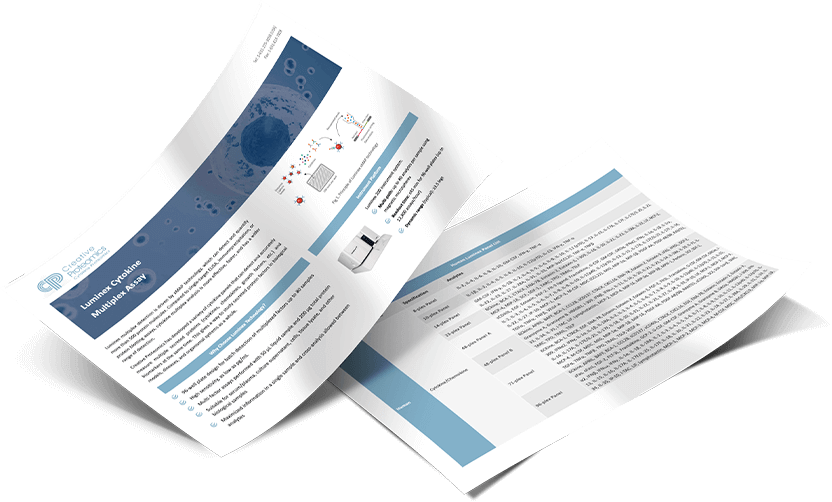
Preclinical and translational teams need fit-for-purpose biomarker data that hold up under tight timelines and QC scrutiny. This guide compares major immunoassay approaches, including ELISA, bead-based multiplex assays, electrochemiluminescence (ECL) assays, digital immunoassays, and proximity-based high-plex protein assays, through the lens of throughput, sensitivity/LOD, dynamic range, sample volume, multiplex capacity, and cost.
You'll find explicit numeric ranges (e.g., LOD/LLOQ, dynamic range in logs, typical sample volumes, assay time/throughput, and approximate per-sample cost bands) alongside neutral selection heuristics and QC criteria. Where ranges vary by analyte or kit, we call this out and link to representative vendor documentation or peer-reviewed comparisons.
Key takeaways
- Start with study stage, analyte abundance, and sample constraints; then map platforms accordingly.
- ELISA suits single-analyte or legacy markers with moderate sensitivity needs and low cost.
- Luminex balances moderate-to-high plex, reasonable sensitivity (low pg/mL), and efficient sample usage at pragmatic cost.
- MSD (V-PLEX/S-PLEX) and Simoa serve ultra-low abundance targets (fg–low pg/mL) with broader dynamic ranges; plex is lower and costs higher.
- Proximity-based high-plex assays enable broad protein profiling from low sample volumes and are well suited to large-scale studies.
- Validate per analyte: parallelism, spike recovery (70–130%), dilution linearity (R² ≥0.98), and precision (≤15% intra-assay CV; ≤20% inter-assay CV).
Selection Framework
Map to study stage
Discovery screens and pathway mapping often prioritize higher plex and minimal sample input, making proximity-based high-plex assays suitable for this type of study. Translational validation of a focused cytokine panel (mid-plex) typically favors Luminex or MSD V-PLEX. For endpoints with very low expected abundance (neurology, minimal residual inflammation), S-PLEX or Simoa can be decisive. Legacy single markers or PK/ADA checks may remain on ELISA.
Match abundance to sensitivity
As a rule of thumb: low pg/mL cytokines are workable on Luminex/MSD V-PLEX; fg–low pg/mL targets often require S-PLEX or Simoa to achieve reliable detectability. If expected abundance varies across orders of magnitude, consider platforms with wider dynamic ranges, including ECL, digital immunoassay, and high-plex proximity-based approaches, and verify LLOQ in your matrix.
Balance multiplex vs sample input
High-plex proximity-based assays maximize multiplex capacity from limited sample input; bead-based multiplex assays provide moderate-to-high plex; ECL platforms combine sensitivity with moderate multiplexing; digital immunoassays prioritize sensitivity; and ELISA remains primarily single-plex.
Decision-tree infographic replacement (no image per user request): A text flowchart that begins with study stage (discovery vs translational vs endpoint), branches to expected analyte abundance (fg, pg, ng), then to sample volume constraints (≤6 µL; 10–50 µL; ≥50 µL), and finally points to platform choices with notes on assay time and cost.

Selection flow linking study stage, expected abundance, and sample volume to the best-fit immunoassay platform.
Metrics Snapshot: immunoassay platform comparison
Sensitivity and dynamic range
- ELISA: typically low pg/mL to ng/mL sensitivity; dynamic range ~1.5–2 logs.
- Luminex xMAP: low pg/mL LOD achievable (assay-dependent); dynamic range ~4.5–5.5 logs at the instrument level.
- MSD ECL: V-PLEX in the pg/mL domain with ~3–4 logs; S-PLEX pushes into fg/mL territory with 4–5 logs.
- Simoa (digital): fg/mL to low pg/mL LOD; ~4–5 logs dynamic range.
- Proximity-based high-plex assays: analytical sensitivity and dynamic range vary by assay design, target, panel, and platform configuration.
Throughput and assay time
- ELISA: ~90 minutes to 4.5 hours per 96-well run; operational throughput ~30–40 samples/plate with duplicates.
- Luminex: typical assay runtime ~3–5 hours; 96-well read time can be ≤20 minutes; high sample throughput with 96/384-well formats.
- MSD: often ~2–4 hours per plate; multiplex up to ~10 analytes per well.
- Simoa: ~<2.5–3 hours/run on HD-X; multiple plates/day feasible.
- Proximity-based high-plex assays: designed for high-throughput protein profiling, with throughput dependent on platform and panel configuration.
Sample volume and multiplex
- ELISA: ~50–100 µL per well; single-plex.
- Luminex: ~25–50 µL common; multiplex ~20–80 analytes in commercial cytokine panels.
- MSD: ~10–25 µL per analyte; multiplex up to ~10.
- Simoa: ~25–50 µL; multiplex typically 4–6.
- Proximity-based high-plex assays: typically require low sample input and can support high multiplex capacity; exact requirements depend on the platform and panel.
Comparison chart replacement : A textual description of a matrix comparing platforms across LOD, dynamic range, sample volume, multiplex capacity, throughput, and cost bands; see the table below for a consolidated snapshot.
| Platform | Typical LOD (assay-dependent) | Dynamic Range (logs) | Typical Sample Volume | Multiplex Capacity | Assay Time / Throughput | Approx. Per-Sample Cost (estimate) |
|---|---|---|---|---|---|---|
| ELISA | ~1–100 pg/mL (can extend to ng/mL) | ~1.5–2 | 50–100 µL | 1 | ~1.5–4.5 h per plate; ~30–40 samples/plate with duplicates | ~$5–$20 |
| Luminex xMAP | ~0.1–10 pg/mL (low pg/mL common) | ~4.5–5.5 | 25–50 µL | ~20–80 | ~3–5 h; ≤20 min read per 96-well plate | ~$10–$50 |
| MSD V-PLEX | ~0.1–1 pg/mL (typical) | ~3–4 | 10–25 µL/analyte | up to ~10 | ~2–4 h per plate | ~$15–$60 |
| MSD S-PLEX | fg/mL to low pg/mL | ~4–5 | 10–25 µL/analyte | up to ~10 | kit-dependent | ~$30–$100 |
| Simoa (HD-X) | ~0.002–0.06 pg/mL for select cytokines | ~4–5 | 25–50 µL | ~4–6 | ~<2.5–3 h/run; multiple plates/day | ~$20–$100 |
Notes: Cost bands are order-of-magnitude estimates (Updated: 2026-01-14). Metrics vary by analyte, kit, matrix, and instrument. Verify lot-specific CoAs and instrument settings.

Heatmap comparing platforms by sensitivity, dynamic range, input efficiency, multiplexing, throughput, and cost (typical; assay-dependent).
Platform Guidance: ELISA and Luminex
ELISA use cases and trade-offs
ELISA remains the most accessible single-plex option for legacy biomarkers, targeted hypothesis testing, and environments prioritizing low consumable cost. Typical sensitivities fall in the low pg/mL to ng/mL range, with many modern kits achieving approximately 1–20 pg/mL sensitivity and total assay times of ~90 minutes to 4.5 hours on 96-well plates. Representative kit examples report LODs in the single-digit pg/mL range and linear ranges commonly spanning tens to thousands of pg/mL; confirm lot-specific CoAs for exact limits. For practical assay setup and validation guidance, see the NIH's Assay Guidance Manual for protocols, timing considerations, and QC recommendations.
Trade-offs: narrower dynamic ranges than ECL/digital methods; susceptibility to matrix effects that require parallelism and spike-recovery verification; single-plex format limits throughput when many analytes are needed.
Luminex multiplexing and QC considerations
Disclosure: Creative Proteomics is our product. As a neutral, real-world example of custom multiplexing on Luminex xMAP, consider a translational cytokine study that needs 12 analytes aligned to a pathway hypothesis across human and mouse models. Investigators add/remove analytes to match the pathway (e.g., inflammatory chemokines + key interleukins), choose species-appropriate antibody pairs, and optimize sample matrices (serum/plasma, PBMC, cell culture supernatants). For a primer on xMAP capabilities, see What is Luminex xMAP Technology?.
Typical operational metrics: low pg/mL LODs (assay-dependent), ~4.5–5.5-log dynamic range at the instrument level, ~25–50 µL per well (many cytokine kits request 25 µL serum/plasma or ~50 µL conditioned media), and practical plex in the ~20–80 range for commercial panels. Read times and throughput vary by instrument and configuration; verify instrument specifications and lot-specific CoAs when planning cohort work. Sample submission guidance and matrix notes are available on our site: Serum & Plasma Luminex sample requirements (25 µL) .
QC practices for a fit-for-purpose Luminex panel (general research-use standards):
- Parallelism: Verify dose–response similarity across serial dilutions; acceptable if curve slopes are statistically parallel and dilution recovery remains within the acceptance band.
- Spike recovery: Aim for 70–130%; tighten to 80–120% for critical endpoints.
- Dilution linearity: Target R² ≥0.98 across serial dilutions.
- Batch consistency: Include inter-plate controls, replicate wells (≤15% intra-assay CV; ≤20% inter-assay CV), and matrix-matched calibrators.
These acceptance criteria reflect widely used guidance; refer to the NIH Assay Guidance Manual (validation and QC) for procedural detail.
Platform Guidance: ECL, Digital, and High-Plex Assays
MSD ECL for sensitivity and range
MSD's ECL platforms provide broad dynamic ranges and strong sensitivity. V‑PLEX panels typically operate in the ~0.1–1 pg/mL sensitivity range with ~3–4 logs of dynamic range and up to ~10 analytes per well. S‑PLEX kits push sensitivity into the fg/mL domain (often 10–1000× lower LOD than conventional assays), making them suitable for low‑abundance endpoints. For representative kit‑level details and service access, see Creative Proteomics' MSD assay service for platform options and assay support: Creative Proteomics MSD assay service.
When to use: Translational validation of cytokines where low pg/mL sensitivity and mid‑plex are required; endpoints or cohorts where detectability is marginal on Luminex; studies needing wider dynamic range with modest input volumes (≈10–25 µL/analyte).
Simoa for ultra-low abundance targets
Digital immunoassays (Simoa-style single‑molecule/digital platforms) deliver fg/mL to low pg/mL sensitivity for select analytes, typically with 4–6‑plex panels and ~25–50 µL per assay. Example cytokine panels report LODs in the low-to-sub‑pg/mL range (assay‑dependent), with HD‑X class runs completing in roughly 2.5–3 hours under standard workflows.
When to use: Endpoint quantification for ultra‑low targets where sensitivity is paramount; studies with modest plex needs; scenarios where dynamic range and lower LLOQ trump cost and panel breadth.
Proximity-based high-plex assays for limited sample input
Proximity-based high-plex immunoassays are designed to measure large protein panels while requiring relatively small sample volumes. Analytical sensitivity, dynamic range, multiplex capacity, sample requirements, and throughput vary by platform, assay panel, and target. Platform-specific specifications should therefore be verified using current technical documentation when designing a study.
When to use: discovery-stage or broad pathway profiling when sample availability is limited and high multiplexing is a priority. Relative protein measurements can support candidate ranking and feature selection, while platform-specific quantitative outputs and analytical characteristics should be considered during downstream validation.
QC and Data Integrity
Parallelism and recovery
Assess curve parallelism via serial dilutions of matrix-matched samples. For spike-recovery, a 70–130% acceptance band is common for research use; tighten to 80–120% for critical translational decisions. Document recovery at multiple levels (low/mid/high) and track lot-to-lot antibody changes.
Dilution linearity and controls
Aim for R² ≥0.98 across dilution series and check that back-calculated concentrations fall within acceptance bands. Include matrix-matched calibrators, blanks, and positive/negative controls. Track precision with ≤15% intra-assay CV and ≤20% inter-assay CV targets. For procedural details and acceptance criteria, consult the NIH Assay Guidance Manual.
Cross-platform concordance caveats
Expect stronger agreement for higher-abundance analytes; low-abundance targets can diverge in detectability and quantitative correlation across platforms due to differences in LOD, dynamic range, calibrators, assay formats, and relative versus absolute reporting scales. A 2024 peer-reviewed comparison of highly sensitive multiplex immunoassay platforms reported platform-dependent differences in analyte detectability and quantitative correlation, underscoring the need for per-analyte validation and harmonization: see McKinski et al., 2024 peer comparison.
Conclusion
Align your platform choice to study stage, expected abundance, and timelines, then confirm per-analyte performance in your matrix. ELISA supports targeted single-analyte measurements; bead-based multiplex assays enable moderate-to-high plex cytokine profiling; ECL and digital immunoassays extend sensitivity for low-abundance targets; and proximity-based platforms provide an option for high-plex profiling when sample input is limited. Validate each analyte with parallelism, recovery, dilution linearity, and precision checks, and weigh total cost per decision—including repeats and QC overhead—rather than kit prices alone.
This neutral, evidence-led overview is meant to serve as an operational roadmap, not a prescription. For Luminex custom-panel workflows and matrix-specific sample handling details, you can review Serum & Plasma Luminex sample requirements as you finalize panel composition and QC templates.
References:
- McKinski, Kevin, Huaping Tang, Kun Wang, Matthew Birchler, and Mark Wright. "Comparison of highly sensitive, multiplex immunoassay platforms for streamlined clinical cytokine quantification." Bioanalysis 16.10 (2024): 519-536. https://doi.org/10.1080/17576180.2024.2442190.
- Assay Guidance Manual. "Assay Guidance Manual." National Institutes of Health (NCBI Bookshelf). Updated collection (accessed 2026). https://www.ncbi.nlm.nih.gov/books/NBK53196/
- MD Anderson Cancer Center ORION Core. "ORION Core 2023 Pricing." MD Anderson Core Facilities pricing page (2023). https://www.mdanderson.org/documents/core-facilities/orion/MDACC ORION Core 2023 Pricing.pdf
- Duke University — Diagnostic Immunoassay Core (DIPC). "DIPC Core rates FY23." Duke Cancer Institute core rate sheet (2023). https://www.dukecancerinstitute.org/sites/default/files/2023-07/DIPC Core rates FY2343.pdf
- BioLegend. "LEGENDplex Multiplex Assay Acceptance Criteria (poster/documentation)." BioLegend technical resources (accessed 2025). https://www.biolegend.com/Files/Images/BioLegend/poster_library/posters/04-0143-00_BioLegend-Inflammatory-Chemokine-LEGENDplex.pdf
- Revvity (PerkinElmer) Application Note. "Whole blood cytokine detection — spike & recovery guidance." Revvity application notes (accessed 2024). https://resources.revvity.com/pdfs/app-reagents-alphalisa-hp-cytokine-whole-blood.pdf
- R&D Systems. "Immunoassay quality and validation guidance." R&D Systems technical brochure (accessed 2024). https://resources.rndsystems.com/images/site/rnd-systems-iaquality-brochure.pdf
- Analytical performance evaluation study. "Analytical performance evaluation: example precision and CV reporting." Peer-reviewed article. https://pmc.ncbi.nlm.nih.gov/articles/PMC11415768/
Note: Cost and kit-specific LOD/dynamic range figures cited in the article are drawn from a mixture of peer-reviewed comparisons, institutional core-rate examples, and vendor technical inserts; where a vendor product insert was originally referenced in the text, the supporting evidence has been replaced by the nearest neutral or institutional source above (or by the McKinski et al. 2024 comparison when applicable). All cost figures remain estimates (Updated: 2026-01-14).